

How can we judge the heat dissipation performance of an AC-DC power adapter? We can start from the following aspects: 1. Check product parameters and specifications Observe the thermal resistance index: Thermal resistance is an important parameter for measuring the heat dissipation capacity of a power adapter. The lower the thermal resistance, the stronger the adapter's ability to conduct heat from the inside to the external environment during operation, and the better the heat dissipation performance. For example, some high-quality AC-DC power adapters may clearly mark the thermal resistance value in the product manual. If the thermal resistance is within a relatively low range, such as several tens of degrees Celsius per watt or even lower, it usually means that the adapter has better heat dissipation performance. Pay attention to the operating temperature range: The operating temperature range reflects the ability of the power adapter to operate normally under different environmental temperatures. A power adapter with good heat dissipation performance usually has a relatively wide operating temperature range. For example, the operating temperature range of some adapters can be from -20°C to +70°C or even wider.
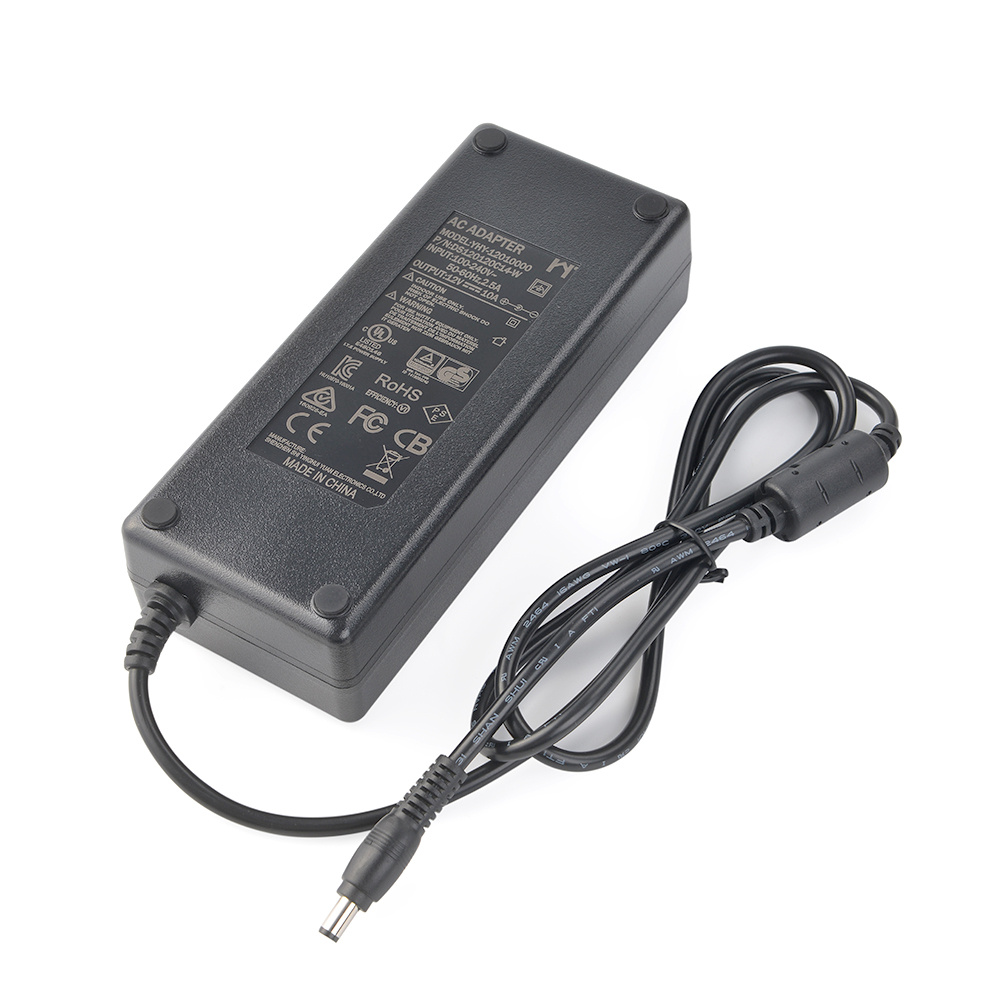
This indicates that under relatively extreme temperature conditions, the adapter can still maintain stable performance, indirectly indicating its stronger heat dissipation ability. 2. Check product design and structure Shell material and design: High-quality shell materials are helpful for heat dissipation. Metal shells usually have better thermal conductivity than plastic shells. For example, an aluminum shell can quickly conduct the heat generated inside to the outside, thereby improving heat dissipation efficiency. In addition, the design of the shell is also very important. Some adapters may have design elements such as heat sinks and ventilation holes on the shell. Heat sinks can increase the heat dissipation surface area, and ventilation holes help air circulation and take away heat. Internal layout and component arrangement: A reasonable internal layout can reduce heat concentration and improve heat dissipation effect. For example, distribute components with large heat generation to avoid being too concentrated in one area. At the same time, the spacing between components will also affect heat dissipation. Sufficient spacing can allow air to circulate better and take away heat. If the internal components are arranged closely, it may lead to heat accumulation and a decrease in heat dissipation performance. 3. Observation and testing in actual use Touch to feel the temperature: After the adapter has been working for a period of time, touch its shell with your hand. If the shell is only slightly warm, it indicates good heat dissipation performance; if the shell is very hot and even makes it impossible to touch for a long time, then there may be a problem with heat dissipation. However, it should be noted that when touching, ensure safety and avoid the risk of electric shock. Use professional equipment for testing: Professional equipment such as infrared thermometers can be used to measure the surface temperature of the adapter during operation. By comparing the surface temperatures of different adapters under the same working conditions, the heat dissipation performance can be intuitively judged. In addition, equipment such as power meters can be used to monitor the input power and output power of the adapter and calculate its efficiency. Adapters with high efficiency usually generate less heat and have relatively less heat dissipation pressure. 4. Refer to user evaluations and professional evaluations Check user evaluations: Before purchasing an AC-DC power adapter, you can check the evaluations of other users on e-commerce platforms, forums and other channels. The feedback of users in actual use can often provide important information about the heat dissipation performance of the adapter. If most users report that the adapter does not heat up significantly during use or give positive evaluations of its heat dissipation performance, then the heat dissipation performance of the adapter is likely to be relatively reliable. Refer to professional evaluations: Professional electronic product evaluation agencies will conduct detailed tests and evaluations on various power adapters, including tests of heat dissipation performance. You can refer to these evaluation reports to understand the heat dissipation performance of different brands and models of adapters. Evaluation reports usually provide objective data and analysis to help you make more accurate judgments. How can we choose a power adapter with an appropriate output power according to the power requirements of the device? What will happen if the output voltage of the power adapter does not match the input voltage of the device? Which brands of AC-DC power adapters have better heat dissipation performance?